It's a Sunday in Soweto and you hear it before you see it. Amapiano leaking out of a car boot somewhere down the street. The hiss and blue smoke of meat hitting a shisanyama grill. Kids' feet slapping the tar as a soccer ball skips past your ankles. Someone's gogo greeting you like she's known you for years.
This is the South Africa I was born into.
 I'm a born-free — part of the generation that grew up after 1994, in a country those before us bled for. We never had to carry a passbook. We voted the first time we were old enough. And because of that, I can walk down the same Soweto streets where students once marched into gunfire, and feel not just the weight of that history, but the joy of everything it made possible. That's the Soweto I want to show you. Not a township to pity from a bus window — the loudest, most creative engine room of South African culture.
A city built on gold, and the people who really built it
 To understand Soweto, you have to understand eGoli — Johannesburg, the City of Gold. When gold was struck on the Witwatersrand in 1886, it pulled people from every corner of the country and beyond: Zulu, Sotho, Tswana, Xhosa, Venda, men from as far as Mozambique and Malawi, all chasing work in the mines. Apartheid then forced Black families out of the city and into the South Western Townships — Soweto — to keep them close enough to labour but far enough to control.
But here's the thing about putting all of South Africa's working class in one place: you don't get silence. You get fusion.
Out of that pressure cooker, a brand-new culture was born — one that didn't exist anywhere before and still keeps mutating today. A whole language grew here: Iscamtho, the township slang that blends isiZulu, Sesotho, Afrikaans, English and pure invention into something you have to grow up around to keep up with. The music tells the same story — from marabi and kwela in the shebeens, to kwaito in the '90s when we finally had something that sounded like us, to amapiano now, born in these same Gauteng townships and currently taking over dancefloors from Lagos to London. The fashion, the dance moves, the slang your favourite global artist is borrowing — a lot of it started in a Soweto street. We are the trendsetters, and most of the world doesn't even know it.
That's what I mean when I say Soweto isn't a place stuck in the past. It's a place that invents the future and keeps doing it.
The streets that changed a country
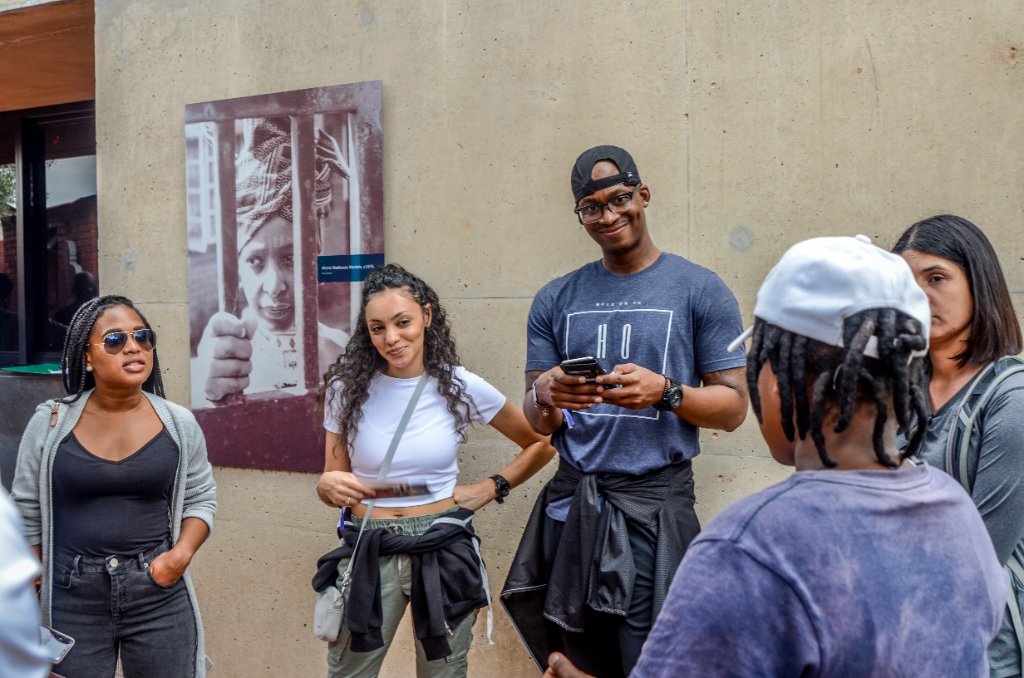
You can't tell this story without June 16, 1976. That's where our tour begins, at the Hector Pieterson Memorial — named for the 12-year-old boy whose body, carried by a screaming teenager, became the photograph that turned the world against apartheid. He was a child marching against being forced to learn in Afrikaans. The museum behind the memorial holds the films, the photos, the first-hand accounts. I won't lie to you — it's heavy. But standing there as a born-free, knowing those kids never got the life I have, is the most important ten minutes of the whole day.
 From there we walk Vilakazi Street, and the mood lifts completely. This is the only street on earth that has been home to two Nobel Peace Prize winners — Nelson Mandela and Archbishop Desmond Tutu lived metres apart. You can stand inside Mandela House, see the modest furniture, the scorch marks on the wall from the petrol bombs, and feel how small the room was that held such a huge life. Outside, cafés spill onto the pavement, jazz floats from a window, and a kid will absolutely try to sell you a beaded bracelet. History and Sunday afternoon, sharing the same block.
Other places we might wander, depending on the day and what pulls you:
Walter Sisulu Square in Kliptown, where the Freedom Charter was signed in 1955 — the document that dreamed up the South Africa I now live in.
Orlando Towers, the old cooling towers painted into giant murals, where the brave throw themselves off on a bungee cord and the rest of us just admire the art.
The shebeens, where the real conversations happen. My favourite is a little spot where Mama Lindi serves tripe stew and pap, and if you get her talking she'll tell you about the secret meetings this neighbourhood used to hide.
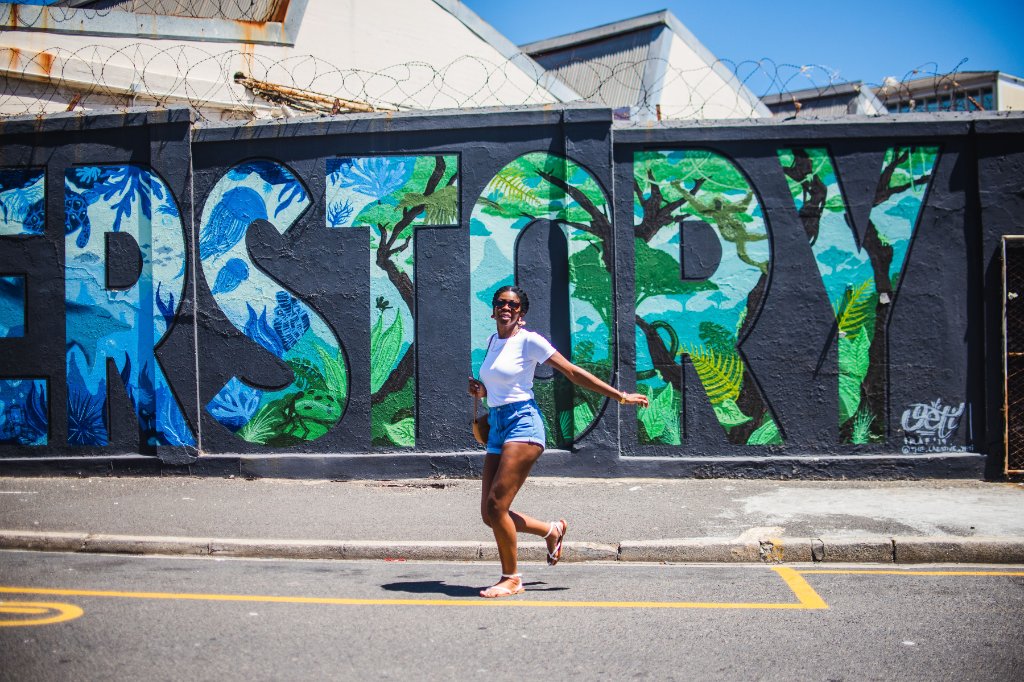
The walls themselves — Soweto's street art changes constantly. One mural near here shows young women on bicycles, a nod to the cycling culture quietly reclaiming Joburg's streets.
Come hungry
I'm not going to walk you around all day and not feed you. Soweto is best understood through your mouth.
You'll taste a kota — a quarter-loaf of bread hollowed out and loaded with chips, polony, cheese, atchar and whatever else the spaza decides — built originally so a worker could eat with one hand. You'll try vetkoek, deep-fried dough stuffed with savoury mince. And if the timing's right, we'll pull up to a shisanyama, where you choose your meat, hand it over the grill, and eat it standing up with pap and chakalaka while someone's playlist runs the whole street. This is how we Sunday.
So who comes on this walk?
Honestly? Everybody, and the day bends to fit you.
If you're travelling solo, you won't feel alone for a second — you'll be deep in conversation with an artist or an old storyteller before you know it. Couples love the slow version: coffee on Vilakazi, a quiet stop at a local artist's studio, a sundowner watching the light go gold over the rooftops. For families, the kids end up drumming, trying gumboot dancing, or wide-eyed in Mandela's tiny house. Groups of friends somehow always end up in a street soccer game or singing along to a performer they've never heard. And if you're a South African who's never really been — come. Most of us learn our own history standing on Vilakazi Street, and it hits different in person.

Tour highlights
Guided by locals — every One Day Africa guide is from here, with the stories to prove it The landmarks — Hector Pieterson Memorial, Mandela House, Tutu House, Kliptown Real culture — artists, musicians and storytellers, not a script The food — kota, vetkoek, shisanyama and a cold one Built for you — solo, couples, families and small groups Gives back — a portion of every tour goes straight into community projects
Frequently asked questions
How long is the tour? About four hours at an easy pace, but we can stretch or trim it. Private tours can add stops and run on your clock.
Is it good for kids? Yes — our guides tell the story in a way younger travellers actually connect with, and there's plenty for them to do with their hands and feet.
Do I need to be fit? It's a leisurely walk on mostly flat ground. Comfy shoes do the job. If mobility's a concern, tell us and we'll arrange vehicle support.
What should I bring? Sunscreen, a hat, water, and a little cash for the things you'll want to buy. Photos are encouraged — just always ask a person before you photograph them.
Is Soweto safe? With a local guide who knows every corner, you're in good hands. It's a warm, friendly community; we just move through it with the same respect you'd want in anyone's home.
Are meals included? Snacks and tastings, yes, and we usually stop for lunch. Full meals can be arranged.
Can we customise it? Completely. Private versions can add Kliptown, Orlando Towers, a cooking class or an art workshop.
This is the invitation
People will tell you to "see" Soweto. I'd rather you feel it — hear the music, taste the smoke off the grill, shake the hand of someone who was here in '76, and watch a place that was built to break people instead become the place that keeps reinventing what it means to be South African.
I'm proof it worked. Come let me show you why.